On July 21, 2026, Lincoln got more than 110 mm of rain in just over an hour. The Town noted that rain that heavy can be more than the drainage systems can handle and cause local flooding and ponding. If your house drains its foundation through a sump pump, an evening like that is when you find out whether the pump is working. A battery backup keeps it running when the power goes out.
The short answer: if your basement relies on a sump pump and you would lose something you care about if it flooded, a battery backup is worth having. Below is why, and how to check your setup before the next storm.
First, find out whether your house relies on a sump pump
Not every house in Lincoln has a sump pump, so start by working out which kind of house you have.
- Newer houses, like those at Prudhommes. The houses on North Service Road east of Victoria Avenue North have been going up since the first phase broke ground in 2022. Houses like these drain their foundations into a sump pit, and a pump lifts that water out. The pipes are new, so the main risk to the basement is a pump that fails or loses power during a storm.
- 1950s to 1970s houses in Vineland and Beamsville. Ontario houses from this period usually have foundation drains connected straight to the sewer, with no sump pump. In heavy rain the problem is more often sewage backing up through the floor drain. A battery backup won't help with that, but a backwater valve will. More on that below.
- Pre-war houses in Beamsville, Jordan, Jordan Station and Rittenhouse Park. These usually have a basement floor drain and no sump pump at all. The same applies: the risk is the sewer, not a pump.
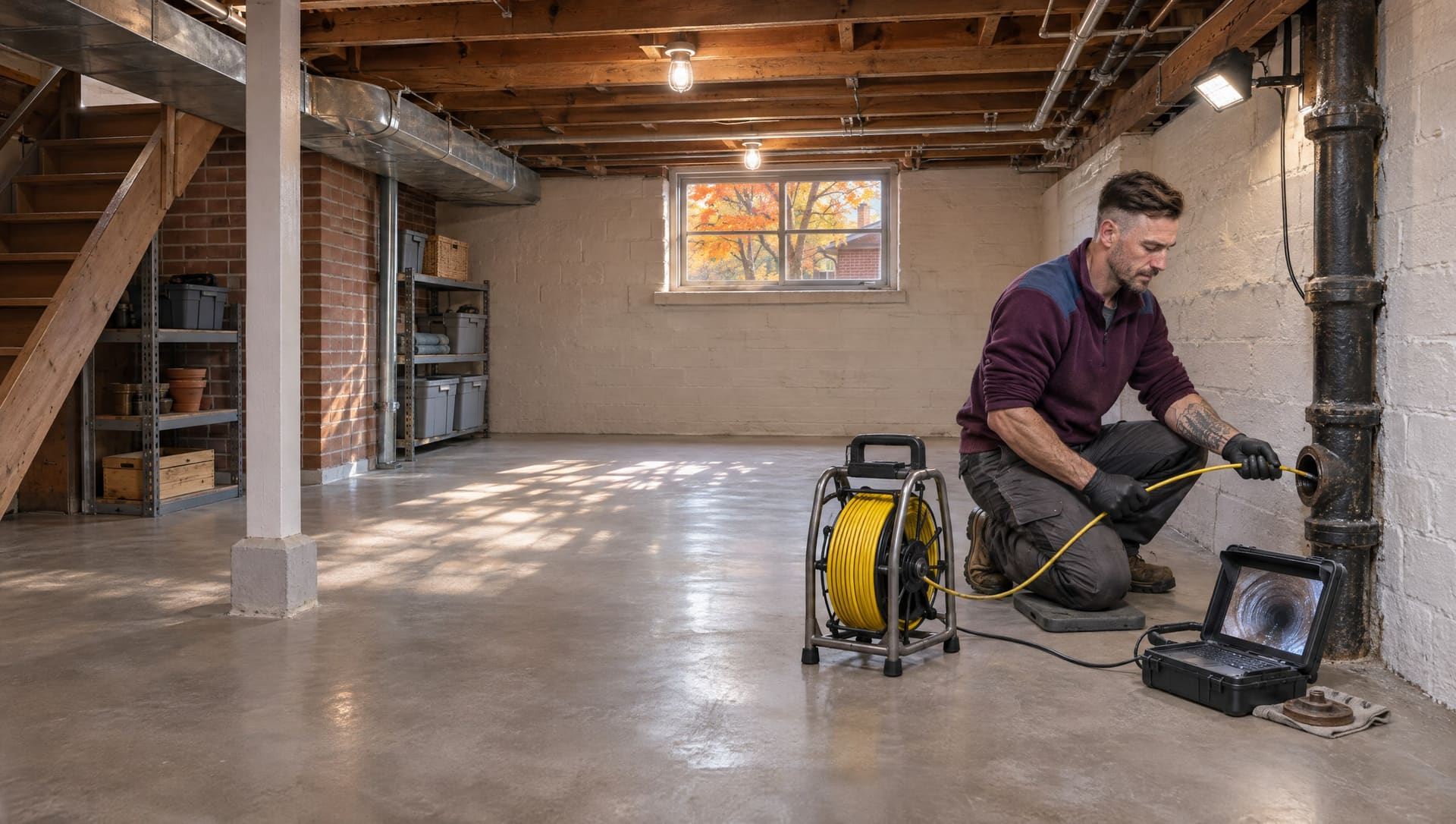
Not sure which you have? Look for a covered pit in the basement floor, usually in a corner or the utility room, with a pipe coming up out of it and running to an outside wall. If you have one, keep reading.
What happens to a sump pump when the power goes out
A standard sump pump runs on household power. When the power goes out, it stops. The foundation drain keeps sending water into the pit, and in heavy rain it can send a lot. Once the pit is full, water has nowhere to go but onto the basement floor. If the drywall, carpet and furnace are down there, that is where the cost comes from.
Storms that bring heavy rain are also the storms that bring down power lines, so the pump is most likely to lose power at exactly the moment it is needed most.
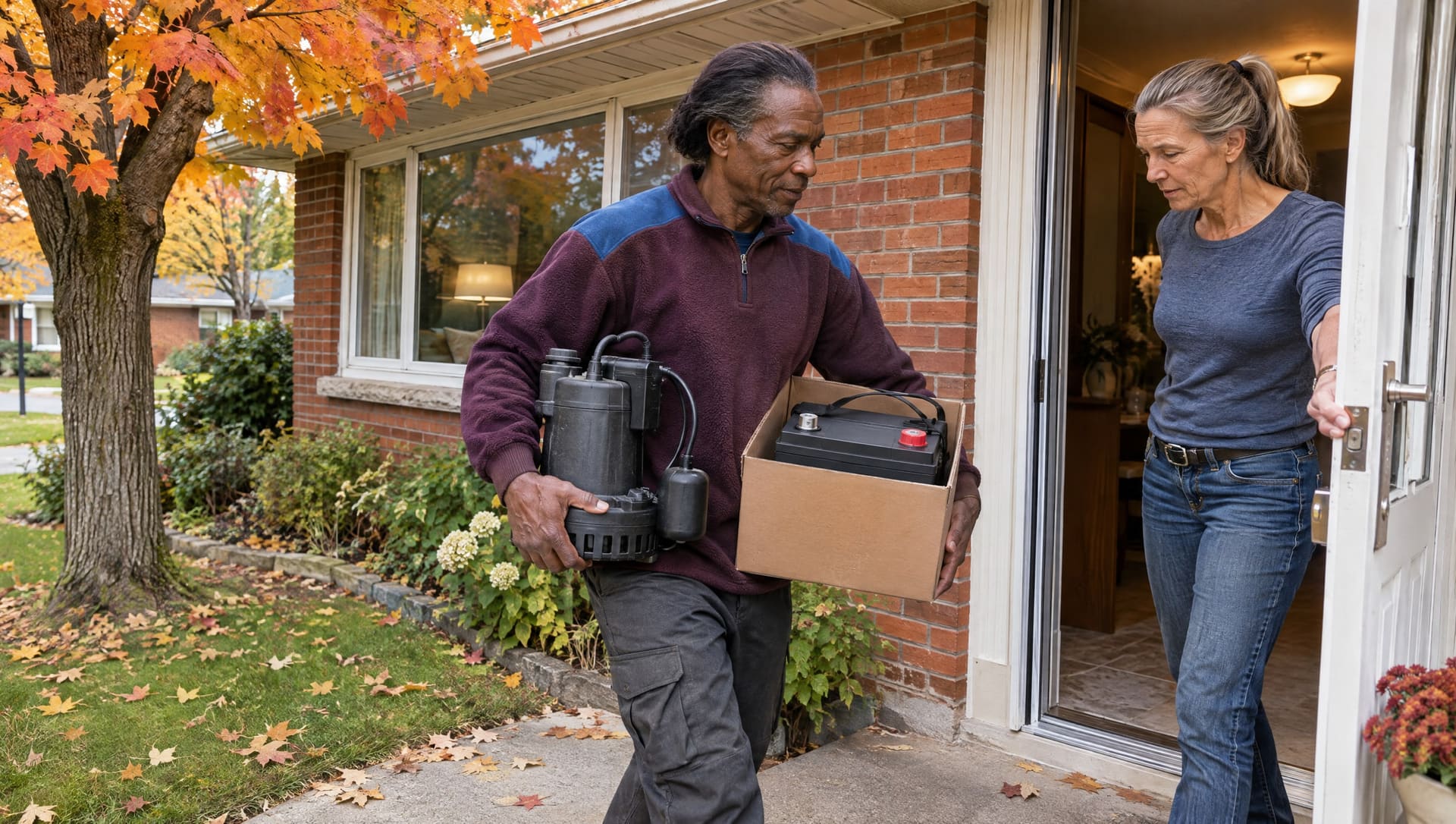
A battery backup is a second, smaller pump in the same pit, connected to a battery that stays charged from the wall. If the main pump stops, either because the power is out or because the pump has failed, the water rises to the backup's float switch and the backup pump starts. Most units also sound an alarm, so you know something is wrong even if you didn't notice the lights go out.
A backup also helps when the power is on. Main pumps sometimes fail on their own: a float gets stuck against the side of the pit, a switch wears out, or the motor burns out after years of running. The backup covers those failures too.
When a battery backup is worth it, and when it may not be
It is usually worth having if:
- the basement is finished, or you store things down there you would hate to lose
- the pump runs often in spring or after rain (you can hear it start and stop)
- you are away from home for days at a time
- the house has had water in the basement before
You can probably weigh it more carefully if the pit stays nearly dry all year and the basement is unfinished concrete. Even then, an inexpensive high-water alarm in the pit tells you when the water is rising.
On cost, in general terms: what you pay depends mainly on the size of the backup pump, the type of battery and how long you want it to run. A bigger battery runs longer in a long outage. Batteries also wear out, so plan on replacing them every so often. Some people also ask about a water-powered backup, which uses pressure from the town water supply instead of a battery. It only makes sense on municipal water. On a private well, as many rural West Lincoln houses are, the well pump needs power too, so it won't help in an outage. See Smithville for more on the wells out there.
How to test a sump pump before heavy rain
You can do this yourself in about the time it takes to fill a bucket. Do it in spring, in fall, and any time a big storm is forecast.
- Take the lid off the pit and look. Clear out any gravel, silt or debris near the pump intake and float. Check that the float can move freely and isn't caught on the cord or the side of the pit.
- Pour water in slowly, using a bucket or a garden hose. The float should rise, the pump should start, the water level should drop, and the pump should shut off on its own. If it hums but no water moves, or it doesn't start at all, that is the time to call.
- Listen when it stops. A loud thunk followed by water running back into the pit means the check valve on the discharge pipe isn't holding, and the pump will end up pumping the same water over and over.
- Go outside and check the discharge. Water should come out of the pipe and run away from the house, not pool against the foundation where it soaks straight back in. Make sure the end of the pipe isn't buried in leaves or crushed.
- Test the backup. With water in the pit, unplug the main pump and pour again. The backup should start, and the alarm should sound if your unit has one. Then plug the main pump back in.
- Look at the battery. Check the charger's indicator light and the terminals for white or green crust. If the battery is old, ask whether it still holds a charge.
While you are outside, point the downspouts away from the foundation. Every litre that runs off the roof and soaks in beside the wall is a litre the pump has to deal with.
Winter and where the water goes
Lincoln's January nights average well below freezing, and the record low at the Vineland station is -25.6 °C. A discharge pipe that runs outside and sags or holds water can freeze solid. If it does, the pump runs and pushes against ice. Check in winter that the outside pipe drains completely and isn't sitting in a snowbank.
The sump should discharge outside, not into the sanitary sewer through a laundry tub or floor drain. In Beamsville's Ontario Street sewershed, the Town has been tracking stormwater that gets into the sanitary sewer, including from illegal sump pump connections. That extra water is part of what fills the sewers in a storm and pushes sewage back up into basements down the street.
If you don't have a sump pump, look at the backwater valve
For the older houses in Vineland, Beamsville and Jordan, the right protection is usually a backwater valve on the main sewer line. It closes when sewage tries to flow back into the house. The Town of Lincoln offers homeowners a subsidy toward a sanitary backwater valve. Funding is limited and given out first-come, first-served, and houses that have flooded from the sewer before are expected to benefit most. In St. Catharines, the City is reimbursing eligible owners for a valve, a sump pit and a backup pump after this summer's flooding. See St. Catharines for details.
If you are unsure whether your house needs a backup pump, a backwater valve, or both, a plumber can look at the pit and the drains and tell you which one fits your house.
To have your pump tested, a battery backup added, or a pump that won't start looked at, see sump pumps.