Most people don't think about the water heater until the shower runs cold or there's water around the base of the tank. By then you're making a decision in a hurry. This guide is meant for the quiet week before that happens. It covers how long a tank lasts in a Lincoln basement, what our water does to it, which repairs are worth making and how to tell when it's time for a new one.
A tank lasts as long as its lining and anode rod
A tank water heater is a steel tank with a glass lining and a metal rod inside called the anode. The anode corrodes slowly so the steel doesn't have to. Once the anode is used up, the water starts working on the tank itself. A tank that's rusting from the inside can't be repaired.
The best guide to how long the maker expects your tank to last is the manufacturer's warranty on the label. A tank that's past that term isn't about to fail, but every year after it is borrowed time. Find the label on the side of the tank and write down the age and the warranty term, so you know where you stand before anything goes wrong.
The house matters too. In a Jordan or Beamsville house built before 1945, the heater is usually in an old basement next to galvanized steel pipe and a floor drain. Replacing it often means dealing with corroded fittings on the pipes running to it. In a 1950s to 1970s house in Vineland or Beamsville, the copper lines are usually fine and the job is simpler. At Prudhommes, where building started in 2022, the tanks are still young, and owners mostly need to look after them.
Hard water in Lincoln shortens a tank's life
Niagara Region's Grimsby Water Treatment Plant supplies Grimsby, West Lincoln and part of Lincoln. On October 1, 2025 the Region listed its hardness at 126 mg/L, which counts as hard water by any common measure. When hard water is heated, the minerals come out of it and settle on the bottom of the tank as scale and sediment.
What that does to the tank:
- In a gas tank, the scale sits between the burner and the water. The tank burns more fuel to heat the same water, and the bottom runs hotter than it should. That popping or rumbling sound when the burner comes on is water trapped under the sediment and boiling.
- In an electric tank, the lower element ends up buried in sediment. It runs hot and burns out sooner than it would in soft water.
- In both, sediment takes up space, so the tank holds less hot water than it used to. It can also clog the drain valve at the bottom.
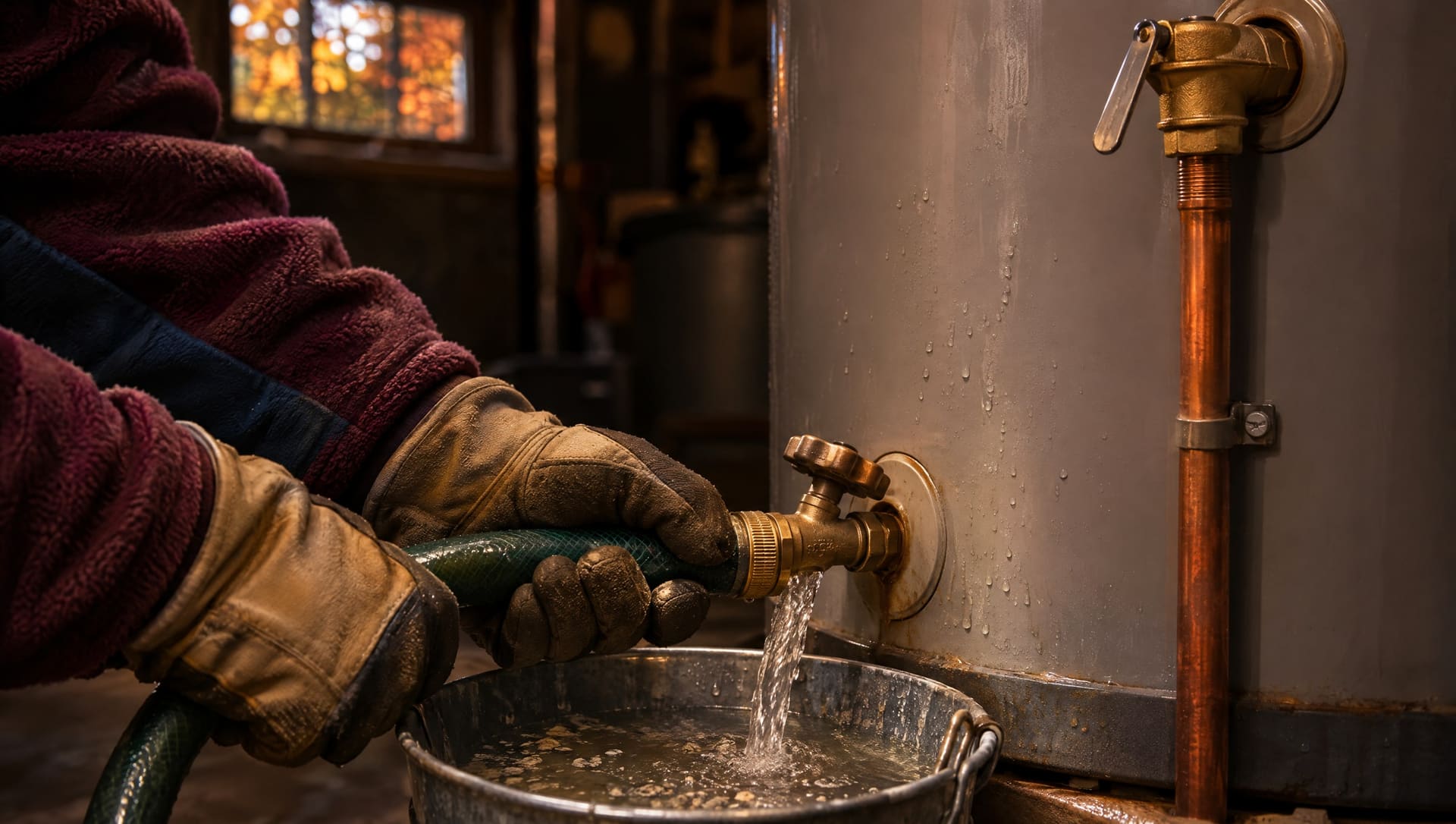
So yes, hard water shortens a water heater's life, but you can slow it down. Draining a few pails from the bottom valve once a year clears out loose sediment before it hardens. If you've never done it on an older tank, be careful. A valve that hasn't been opened in years may not close properly again, so have a bucket and a garden hose ready, or have a plumber do the first one. Checking the anode rod every few years, and replacing it while there's still some left, is the other cheap way to get more years from a tank.
Some repairs hold and some don't
Most water heater problems come from a part, not the tank, and fixing the part is usually the whole job.
Repairs that usually hold:
- No hot water from an electric tank. Often a burnt-out element or a failed thermostat. Both can be replaced, and the tank can go on for years if it's otherwise sound.
- Pilot won't stay lit on a gas tank. Usually the thermocouple or a part of the gas control, not the tank.
- Relief valve dripping. The temperature and pressure relief valve on the side can wear out and be replaced. Find out why it opened, though, because it may be doing its job.
- Hot water runs out quickly. Sediment, a failed lower element or a broken dip tube can cause it, and all three can be dealt with.
The sign that a repair won't hold is water coming from the tank itself: a puddle under the base with no loose fitting above it, or rust weeping through the jacket. The steel has rusted through from the inside, and nothing seals that for long. Rusty hot water when the cold runs clear points the same way. Plan a replacement soon. If the tank is leaking now, close the cold water valve on top, turn off the power or set the gas to pilot, and call. A tank that's letting go is an emergency.
When the tank is sound but old, it comes down to sums. A small part on a tank well inside its manufacturer's warranty is worth fixing. A second repair on a tank that's past its warranty and full of sediment usually isn't.
What drives the cost of a replacement in Ontario
We won't put numbers in a guide because every house is different, but these are the things that move the price up or down:
- Fuel and venting. Swapping like for like is the simplest job. Going from gas to electric or the other way, or changing how a gas tank vents, adds work.
- Size. A bigger tank costs more to buy. Size it to the people living in the house now, not to whatever the old label said.
- Access. A tank at the bottom of narrow basement stairs, or in a tight utility room, takes longer to get out and to get in.
- The pipes around it. In older Beamsville and Jordan houses, corroded galvanized fittings at the tank may need replacing during the swap.
- Permits. Under Ontario's Building Code Act, installing or materially altering plumbing generally needs a permit. The municipal building department says whether a given job does.
- Owning or renting. Many Ontario tanks are rented. Read your agreement before you replace a rented tank, because there may be terms about returning it.
- Timing. A planned replacement lets you compare options. A burst tank on a Sunday doesn't.
Work is performed by licensed plumbers (306A Certificate of Qualification). Gas work is performed by TSSA-certified gas technicians. Whoever you hire, ask for the price in writing before the work starts.
What to look for in an electric water heater
No single electric water heater is best for every house, so check these things against yours:
- Capacity and recovery: how much hot water the household uses at once, and how quickly the tank reheats after everyone has showered.
- Warranty term. A longer manufacturer's warranty on the tank usually means a thicker lining or a better anode. With our hard water, that's worth paying for.
- Anode access. A tank where the anode is easy to reach is one you can actually maintain.
- Heat pump models. These use much less electricity but need floor space, some headroom and a basement that stays reasonably warm. They suit some Lincoln basements better than others.
- Tankless electric. These need a large electrical supply, and many older houses don't have one without an electrical upgrade.
Keep the water at the tap below 49 °C
Part 7 of Ontario's Building Code limits water coming out of a shower head or into a bathtub to 49 °C. Hot enough to scald is hotter than people think, especially for small children and older relatives. If your tank is set higher than that, a mixing valve should bring the water down before it reaches the tub. To check, run the tub tap for a minute and hold a kitchen thermometer under it.
What you can check this weekend
- Read the label: the tank's age and its manufacturer's warranty term.
- Look at the base for rust, damp or white crust.
- Listen for popping when it heats.
- Test the tub temperature.
- Find the cold water shut-off on top of the tank so you know where it is before you need it.
If the tank is past its warranty term and showing two of these signs, start planning. If you'd like someone to look at it with you, see our water heater service.